
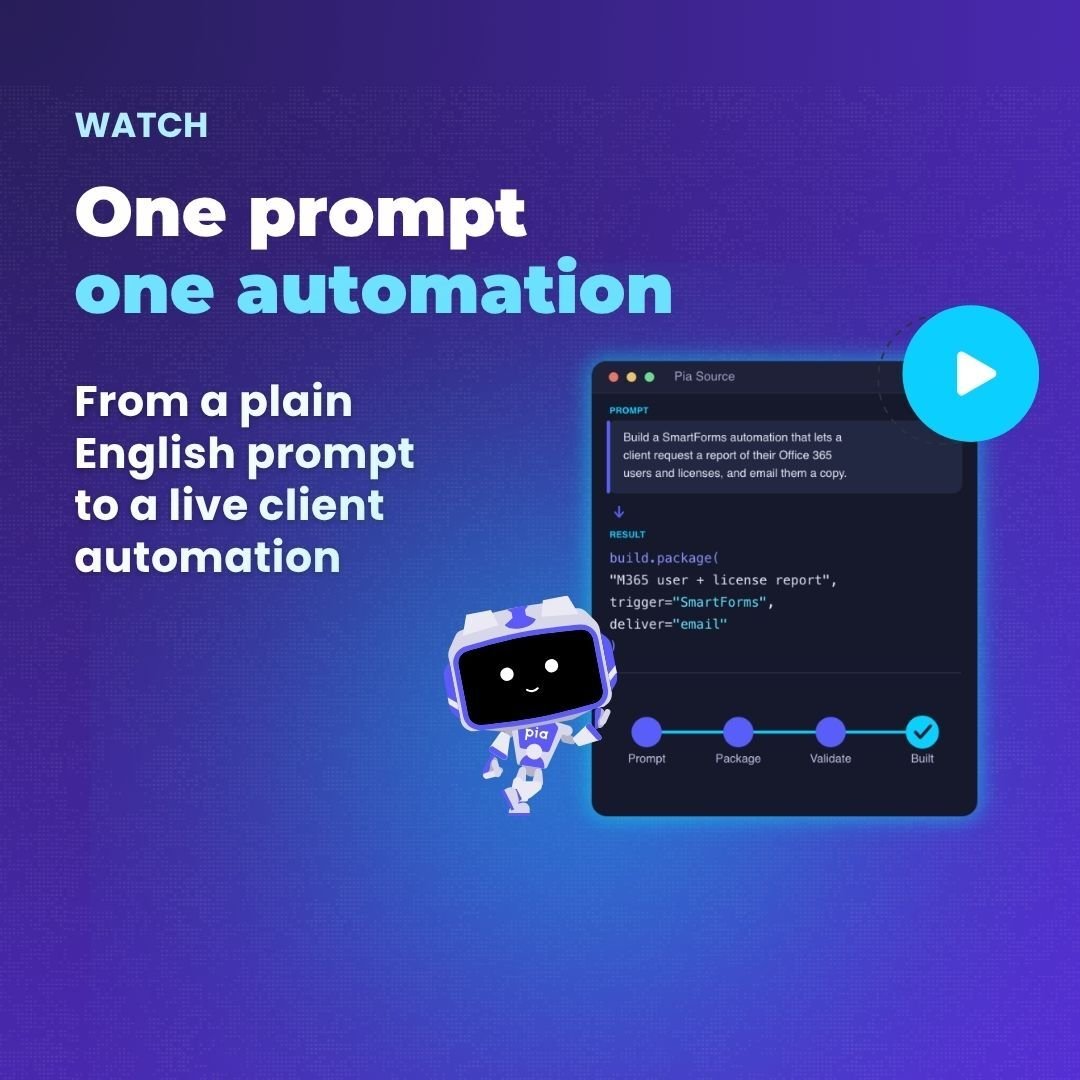
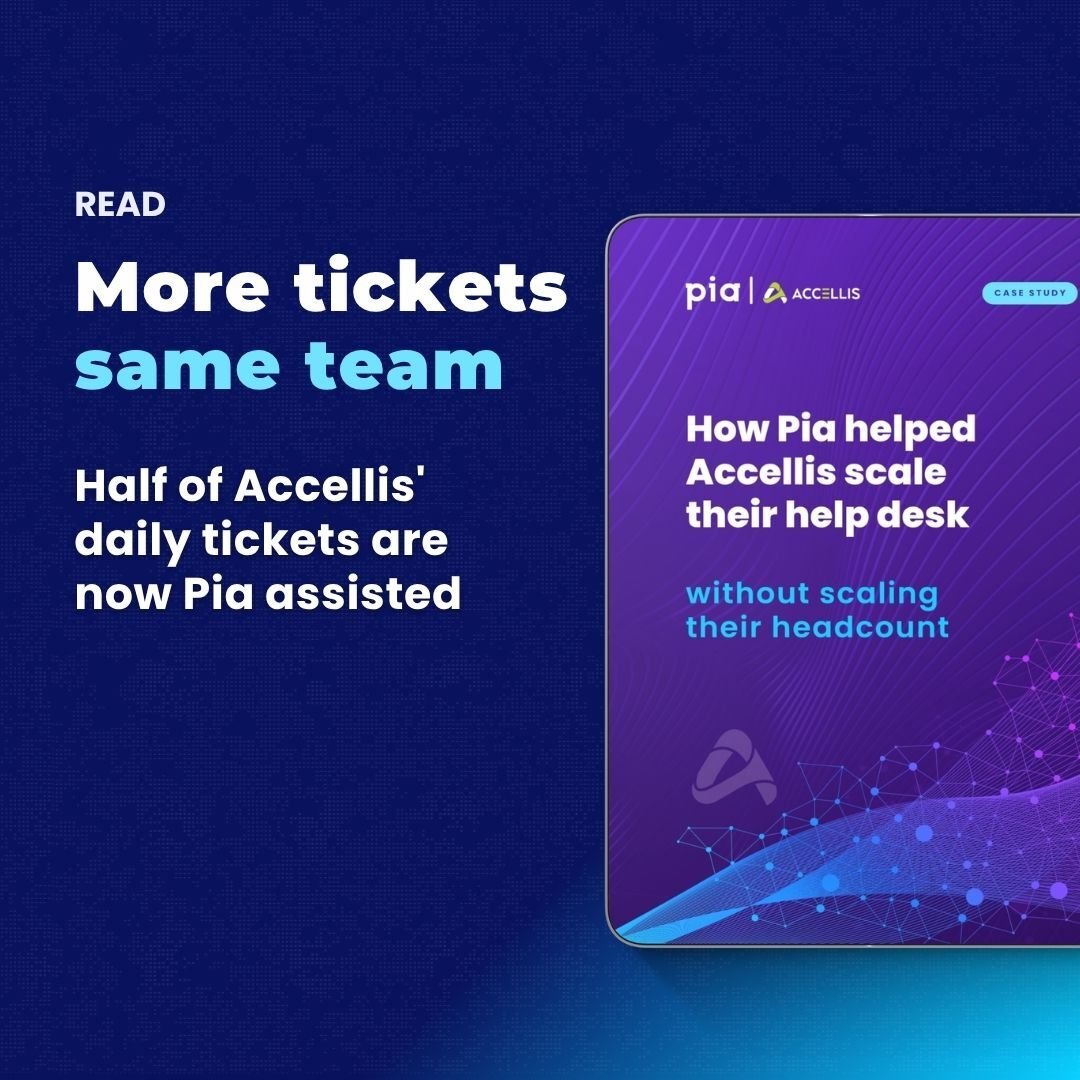
Same process. Every technician. Every time.
When every technician handles a ticket their own way, your SLAs, your margin and your clients' experience depend on who picked it up. Pia runs your process the same way on every ticket, inside ConnectWise PSA, Autotask PSA and HaloPSA.
Illustrative: one new user request, picked up on four different shifts.
Consistency shows up in
the numbers your clients feel

Client satisfaction
97 to 98%
CSAT held while 35 to 40% of daily tickets run through Pia automation
AmericasTickets fully automated
15%
Two dispatchers moved into DevOps and service management roles
New starter fulfillment
<4hours
Down from a three-day SLA, across about 11,000 endpoints
EMEA
How do we continue to grow and scale as an organization while ensuring that we're not diluting our product? Our service that we provide is our product.
Your process, run the same way on every ticket
Consistency breaks in five predictable places. Each step closes one of them.
Define it once
Build your process from 100+ pre-built automations or your own steps, in your order.
Run it from the ticket
Technicians launch the process inside the PSA ticket, so every step gets done on the busiest day too.
Check before it runs
Add checks that catch a wrong format or a missing field before anything changes in the client's environment.
Write it back
Every action is recorded on the ticket as it happens, so your audit trail builds itself.
Change it once
Update the process and every technician, shift and site runs the new version from the next ticket.
"There's a lot of rework and a lot of missed steps as part of things as simple as a user onboarding."
Jon Fitzryk VP of Managed Services & Operations, Diamond IT
- Tickets resolved automatically each month
- 15 to 20%
- Customization needed
- The last 10 to 15%
- Result
- Less rework, lower resolution times
What operations leaders ask us
Something we haven't covered? Bring it to your discovery call.
It runs them. Your SOP becomes the process Pia carries out step by step inside the ticket, so every technician follows it without opening the document.
They can suggest a change, and you decide whether it becomes the process. Once you update it, everyone runs the new version. Complex tickets still go to your team, and your technicians keep the judgment calls.
Every desk runs the same process from inside its PSA ticket, so an acquired team can work your way from its first day on Pia. Where a client needs a variation, you build it once as its own version.
Yes. Edit the steps, add a check or change the order, and it applies from the next ticket. Your technicians can make those updates as client environments change.
A predictable outcome: the request is done the same way every time, and the ticket shows what was done. With SmartForms or Pia Chat, client requests run the same process from the moment they're submitted.
PSA workflow rules move and update tickets. Pia does the work the ticket asks for in Microsoft 365, Active Directory and your other tools, then records each action on the ticket. Your PSA manages the queue and Pia runs the process.
Consistency only holds if the process actually gets run, so adoption is part of the rollout. ramsac, which supports about 11,000 endpoints, appointed Pia champions across its teams, a mix of skeptics and enthusiasts, and made them responsible for delivery. Their rollout took one to two weeks, and their teams now bring a long list of new automations they want built.
Find out where your service desk varies most
In a 30-minute discovery call, we'll look at the tickets your team handles differently today and what it takes to run them one way.
Not ready to talk yet? Estimate your savings with the ROI calculator